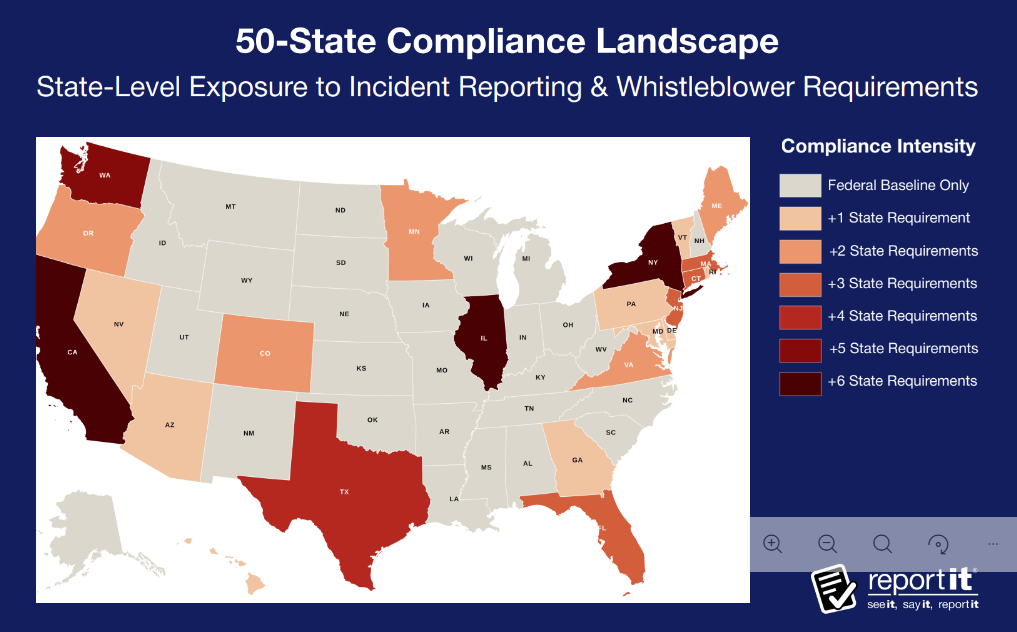
50-State Compliance Landscape
A smarter way to meet reporting and compliance expectations
Today’s employers face increasing pressure to provide safe, documented reporting channels for employees—across every state.
Report It helps organizations meet those expectations with a confidential, easy-to-use platform that supports compliance, reduces risk, and builds trust.
See how your state is impacted
Explore the interactive map to understand the compliance drivers affecting your organization.
Why a reporting system is no longer optional
Regulators, courts, and employees all expect organizations to provide a clear, safe way to report concerns.
Without it, organizations face:
- Increased legal exposure
- Higher risk of unresolved issues
- Lack of documentation when it matters most
With the right system in place, you can:
- Capture issues early
- Demonstrate good-faith compliance
- Strengthen accountability across your organization
Key compliance drivers across the U.S.
Federal requirements & expectations
Most organizations are already subject to federal frameworks that require or strongly encourage internal reporting systems:
- Sarbanes-Oxley Act (SOX) – Confidential reporting for financial misconduct
- Occupational Safety and Health Act protections – Safe reporting of workplace safety concerns
- Title VII of the Civil Rights Act – Reporting channels for harassment and discrimination
- Health Insurance Portability and Accountability Act – Reporting for privacy and security concerns
- U.S. Securities and Exchange Commission whistleblower programs – Strong incentives for reporting misconduct
👉 Bottom line: If employees can’t report internally, they’ll report externally.
State-level trends shaping employer risk
- Expanding whistleblower protections
Many states now offer strong protections against retaliation.
What this means:
You need a documented, defensible process for receiving and handling reports.
- Workplace violence prevention laws
States like California (e.g., SB 553) are raising the bar for prevention programs.
What this means:
Employers must provide clear ways to report threats, incidents, and safety concerns.
- Industry-specific reporting expectations
Healthcare
- Patient safety and incident reporting
- Abuse and neglect reporting
- Privacy and security concerns
Financial services & public companies
- Fraud and ethics reporting
- Audit readiness and internal controls
Government & contractors
- Fraud, waste, and abuse reporting
- Ethics and accountability programs
- Harassment and complaint intake requirements
States increasingly expect structured reporting processes for workplace misconduct.
What this means:
Informal reporting is no longer enough—you need consistency, documentation, and follow-through.
The reality across all 50 states
No matter where you operate, the expectations are the same:
- Employees need a safe, confidential way to report concerns
- Employers must document and respond appropriately
- Failure to act increases legal and reputational risk
How Report It helps
Report It provides a simple, powerful solution to meet these demands:
✔ Confidential, easy reporting
Give employees a safe channel to speak up—anytime, from anywhere
✔ Structured documentation
Capture every report in a consistent, defensible format
✔ Faster response & resolution
Enable your team to act quickly and appropriately
✔ Stronger compliance posture
Support audits, reduce risk, and demonstrate accountability
Built for today’s compliance environment
Report It is designed for organizations that want to:
- Reduce legal and regulatory risk
- Strengthen workplace culture and trust
- Modernize their compliance and reporting processes
Take the next step
Whether you're responding to new regulations or strengthening your existing program, Report It makes it simple.
👉 See how it works
👉 Get started today